

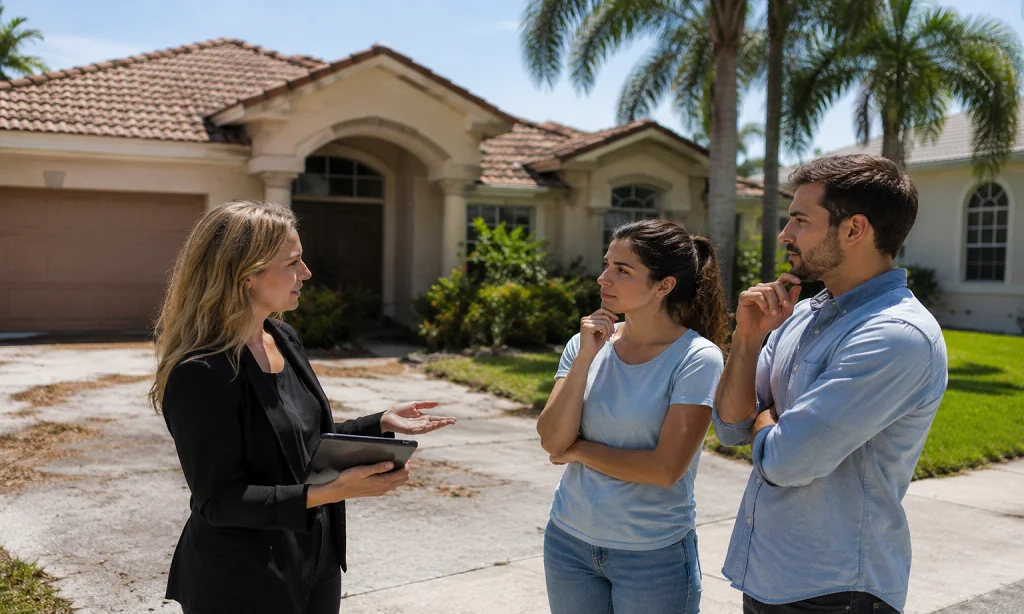
A guy called me last year, pretty pleased with himself. He'd won a condo at a Duval County auction for $31,000. Two-bedroom, decent building. He wanted to know what to do next.
What he had actually bought was a junior lien position on a unit with a $178,000 first mortgage still attached to it, plus about $14,000 in unpaid association assessments that were now legally his.
He'd done research. He'd watched videos. Nobody had explained the one thing that mattered.
At a Florida auction, you are buying a lawsuit's outcome. Not a house.
No inspection. No walkthrough. No title insurance on day one. No financing. And whatever liens were senior to the one being foreclosed are still sitting there when the gavel falls.
That's the honest opening. Not to scare you off — people buy foreclosed homes in Florida successfully every single week, and some of them get genuinely good deals. But almost everything written about this topic reads like a listicle written by someone who has never actually bid.
I'm Kady. I buy distressed property in Florida and I also work with the homeowners on the other side of these cases, which is an unusual place to stand. It means I know what the process looks like from both directions, and I'm going to tell you the parts that cost people money.
The short version
There are three ways in: pre-foreclosure (buy from the owner before the sale), the clerk's auction (cash, fast, risky), and REO (bank-owned, listed on the MLS, financeable). Most people who think they want the auction actually want REO. At the auction you post 5 percent immediately and owe the balance within a day or so — the exact deadline varies by county. You cannot inspect, you cannot finance, and you do not automatically get a clean title. Property taxes, municipal liens, IRS redemption rights and any senior mortgage survive the sale. If it's a condo or an HOA community, past-due assessments become yours — the safe harbor that protects banks does not protect you. Read the lis pendens, pull the title, get the estoppel letter, then bid.
In this article
If you only remember six things
- Find out what's being foreclosed. A second mortgage or an HOA lien foreclosure leaves the first mortgage alive and attached.
- Pull a title search before you bid. Every time. It costs a couple hundred dollars and it's the whole ballgame.
- Condo or HOA? Get the estoppel letter. Past-due assessments follow the property to you.
- Bring certified funds and know your county's deadline. It varies — noon, 2pm, 4pm, same day, next day.
- The owner can redeem until the certificate of sale is filed. Your winning bid isn't final at the gavel.
- Somebody may still be living there. Getting them out is a separate court process that takes 30 to 90 days.
The Three Doors In
"Buying a foreclosure" describes three completely different transactions with different risks, different money, and different people on the other side. Most of the confusion in this whole topic comes from mixing them up.
Before the sale · you deal with the owner
Pre-foreclosure
A case has been filed but the auction hasn't happened. The homeowner still owns it and can still sell. You can inspect, you can get title insurance, you can often finance it, and the seller usually needs speed more than top dollar. This is the quietest door and the one most people never consider — because it requires talking to a human being in a hard moment.
Lowest risk, most legworkThe auction · you deal with the clerk
The foreclosure sale
Run online by the county clerk of court, not the bank. Cash only, sight unseen, sold as-is with every defect and surviving lien attached. This is where the deep discounts live and where the expensive mistakes live, usually in the same auction. Roughly a third of what's listed gets cancelled or postponed at the last minute.
Highest risk, fastestAfter the sale · you deal with the bank
REO / bank-owned
Nobody outbid the lender, so the bank now owns it. It's usually listed with an agent on the MLS, the title has been cleaned up, the occupants are gone, and you can use a normal mortgage. You'll pay more than auction price and buy as-is with no seller disclosures. For most people reading this, this is the right door.
Where most buyers should startDifferent animal · different statute
Tax deed and HOA sales
Not mortgage foreclosures at all. Tax deed sales come from unpaid property taxes under Chapter 197. HOA sales come from unpaid assessments. Both can look like incredible bargains on a screen. Both very often leave a first mortgage fully intact, which is exactly how people end up owning $30,000 worth of trouble.
Know what you're bidding onOne note on the market you're walking into. Nationally, ATTOM counted 39,906 properties with foreclosure filings in July 2026, up 10 percent from a year earlier, and Florida had the third-highest foreclosure rate in the country that month at 0.04 percent of housing units, behind Nevada and South Carolina. Across the first half of 2026, Florida led every state — 27,494 properties, one in every 373 homes.
So there is inventory. There's more of it than there was two years ago. What there isn't, in most Florida counties, is a lack of competition for the good ones.
The Auction, Step by Step
This is the part the other articles skip, so here it is properly.
Under Fla. Stat. § 45.031, the high bidder posts 5 percent right away unless the judgment says otherwise. Miss that and the bidding simply restarts without you. Then the balance comes due, and this is where I want you to be careful, because the deadline is not the same everywhere.
St. Johns County says 2:00 PM the next business day. Lee and Bradford say 4:00 PM the next business day. Jefferson says 4:00 PM the day of the sale. Escambia says 5:00 PM the day of the sale. Every article you'll read online states one deadline as if it's statewide. Look up your county's clerk page before you bid, and read it twice.
The steps, in order
Find the sales calendar
Most Florida counties run these online through the clerk of court, typically on a RealAuction platform. The judgment sets the sale 20 to 35 days out, so listings appear with a few weeks of warning. Register as a bidder early — some counties require your deposit funds to have settled in the clerk's account by 4:00 PM the business day before the auction, which quietly disqualifies people who register the night before.
Pull the case file and read the lis pendens
The court docket is public. You're looking for one thing above all: who is foreclosing, and on what lien. A first mortgage foreclosure wipes out junior liens. A second mortgage or HOA foreclosure does not touch the first mortgage. This single question separates a bargain from a disaster, and it's answerable in fifteen minutes for free.
Order a title search
Not a title insurance policy — you can't get one yet — a search. You want every recorded mortgage, judgment, IRS lien, code enforcement lien, tax certificate and easement. If it's a condo or HOA property, request an estoppel certificate too. Yes, on a property you might not win. Budget for a few of these; it's the cost of doing this seriously.
Look at the actual house
You can't go inside. You can drive by, photograph the roof, look for a blue tarp, see whether the yard is maintained, check whether cars are in the driveway, and knock on a neighbor's door. Neighbors will tell you things no database will — that it flooded twice, that the AC has been out since spring, that someone is still living there.
Set your maximum, and include the extras
Your real cost isn't the bid. Add documentary stamps on the certificate of title (70 cents per $100 of the bid), the court registry fee (commonly 3 percent of the first $500 and 1.5 percent of the balance), any surviving liens, unpaid taxes, assessments you're inheriting, eviction costs, and a repair number you've never been able to verify. Write the maximum down before the auction starts. Auctions are designed to make you move it.
Bid, then pay fast
The lender usually enters a credit bid up to what it's owed, which is why so many auctions end with the bank owning the property. If you outbid that, you win. Post the 5 percent, and have the balance ready in the form your clerk accepts — cash, cashier's check, or wire, depending on the county. Personal checks and business checks are typically refused.
Wait out the objection window
The clerk files a certificate of sale, usually within a day. Then there's a ten-day window for objections. If none are filed, the certificate of title issues — many counties do it around the eleventh business day — and you're the owner. Until then, you have a receipt, not a house.
The win that isn't a win yet
Two things can undo your auction. First, the homeowner's right of redemption runs until the clerk files the certificate of sale — if they pay the judgment in full before that moment, the sale is unwound and you get your money back and nothing else. Second, the court can set a sale aside for irregularities, and a grossly inadequate bid plus any procedural defect is the classic combination.
Neither is common. Both happen. Don't schedule a contractor for the following week.
Experienced bidders in Florida assume the interior is stripped — appliances gone, copper gone, cabinets gone, sometimes drywall gone. Not because every house is, but because when you're wrong in that direction you lose nothing, and when you're wrong in the other direction you lose $40,000.
And in this state specifically, add insurance to your unknowns. A house with an aged roof, or one that's been vacant with the power off through a Florida summer, may be difficult and expensive to insure. Get a rough quote before you bid, not after.
What Survives the Sale
Here's the section that would have saved my caller his $31,000.
A foreclosure sale extinguishes liens junior to the one being foreclosed. It does not touch anything senior, and it doesn't touch several things that sit outside the priority system entirely.
| Item | Survives the sale? | What it means for you |
|---|---|---|
| Junior mortgages and judgments (in a first mortgage foreclosure) | No | Wiped out, provided they were properly named and served in the case |
| A senior mortgage (when a junior lien is foreclosing) | Yes | The big one. You take title subject to a loan you didn't sign and can't ignore |
| Unpaid property taxes and tax certificates | Yes | Taxes hold super-priority. Check the tax collector before you bid |
| Past-due HOA and condo assessments | Yes | You're jointly and severally liable with the prior owner. The bank's safe harbor doesn't apply to you |
| Municipal code enforcement liens and fines | Often | Depends on the lien and the city. Call code enforcement |
| IRS federal tax liens | Special rule | The IRS gets 120 days after the sale to redeem the property from you |
| Easements and restrictive covenants | Yes | Normal, but read them — some restrict rentals or use |
| Occupants and tenants | Yes, physically | You inherit whoever is inside and the process of removing them |
The association assessment trap, specifically
This one deserves its own paragraph because it's the most commonly misunderstood rule in Florida foreclosure buying.
Under Fla. Stat. § 718.116 for condominiums and § 720.3085 for HOAs, a new owner is jointly and severally liable with the previous owner for unpaid assessments that came due before the transfer — and that expressly includes someone who acquires title at a foreclosure sale. There is a safe harbor capping liability at the lesser of twelve months of assessments or one percent of the original mortgage debt.
But that safe harbor is written for a first mortgagee, its successors or assigns. A third-party bidder at the auction is none of those things. The bank gets the cap. You get the full bill.
What buyers assume
"The foreclosure wipes out the HOA debt. That's the whole point of buying at auction — you get a clean slate and start fresh with the association."
What Florida law says
Past-due assessments follow the unit to the new owner, and the statutory cap protects the lender, not you. On a neglected condo, that number is routinely five figures. Get the estoppel certificate first.
Same logic applies to the biggest trap of all. If you're bidding at an HOA's foreclosure sale, or a second mortgage foreclosure, you are buying a property with the first mortgage still on it. Those are the auctions with the shockingly low numbers, and the low number is the market telling you exactly what it's worth.
Getting the Keys
You won, you paid, the certificate of title issued. You are now the legal owner of a house you have never been inside, and possibly one that somebody else is living in.
If someone's still there
You cannot change the locks, shut off the power, or move their things to the curb. Doing any of that turns your investment into a lawsuit where you're the defendant. The correct route is a writ of possession: you move the court for it, the judge grants it, the clerk issues it, the sheriff serves it and then executes it.
Budget 30 to 90 days and a few hundred dollars in costs. Budget more if it's a tenant rather than the former owner, because tenants can have federal protections that give them additional notice.
There is also the faster, cheaper option that experienced buyers use constantly and beginners never think of: knock on the door and offer relocation money. A few thousand dollars for a clean, on-schedule move-out is usually less than the eviction costs plus the damage an angry occupant does on the way out. It's not a trick. It's the humane version and the cheap version at the same time.
The title insurance problem
This surprises people. A certificate of title makes you the owner, but it doesn't make your title insurable the next morning.
Title underwriters are cautious about foreclosure-derived title, because a defect in the case — someone not properly served, a junior lienholder never named, an heir nobody knew about — can come back later. Depending on the file, an underwriter may insure you fairly quickly, may want to wait out challenge periods, or may want a quiet title action before they'll write a policy.
That matters even if you plan to keep the property forever, because you'll want to sell or refinance eventually and a buyer's lender will require title insurance. Talk to a title company before you bid on anything unusual, and factor a possible quiet title action into your numbers.
First 48 hours checklist
Insure it the day title issues, even a bare-bones vacant policy. Secure it — locks, board anything open, cut the grass so code enforcement doesn't start writing. Turn utilities on in your name so you can actually assess it. Call the tax collector and the association for exact payoff figures. And take dated photographs of everything before you touch a single thing.
How People Actually Pay for These
Short version: you cannot get a conventional mortgage for an auction purchase. The timeline makes it impossible — no lender underwrites, appraises and funds a loan in one business day on a property nobody can enter.
| How you're paying | Works at auction? | Works for REO? | Notes |
|---|---|---|---|
| Cash | Yes — the only real option | Yes | Certified funds, in the form your clerk accepts |
| Hard money / private lender | Sometimes | Yes | Fast but expensive; arrange it and get proof of funds well before sale day |
| HELOC on another property | Yes, if already drawn | Yes | Common route for people buying their first one |
| Conventional mortgage | No | Yes | Property must be in financeable condition — many aren't |
| FHA 203(k) renovation loan | No | Yes | Rolls purchase and repairs into one loan; slower, paperwork-heavy, genuinely useful |
| Fannie Mae HomeStyle | No | Yes | The conventional equivalent of a 203(k) |
| VA or USDA | No | Sometimes | Condition standards are strict; distressed properties often fail them |
If you're an owner-occupant rather than an investor, pay attention to the renovation loans. A 203(k) on a bank-owned house that needs $40,000 of work is frequently a better outcome than an auction win, because you get an inspection, an appraisal, insurable title, and a house nobody's living in — and you finance the repairs at mortgage rates instead of credit card rates.
Also worth knowing: HUD-owned homes (from foreclosed FHA loans) have an owner-occupant priority window before investors can bid. If you're buying to live in it, that's a real advantage that costs you nothing but patience.
The Slower Doors, and Why They're Usually Better
I want to be straight about something. Most people who come to me asking about auctions should not be buying at auctions.
Not because they're not smart enough. Because the auction discount is compensation for risk — no inspection, no title insurance, surviving liens, occupied properties, cash on a one-day clock. If you're buying one house to live in, you are being paid a discount to absorb risks you have no way to spread across other deals.
REO, in practice
Bank-owned properties are listed like any other house. You tour it, inspect it, finance it, and close with title insurance. In exchange you'll pay more, you'll get no seller disclosures, and the bank will be slow, rigid, and unsentimental about repair requests. Expect an as-is addendum, a per-diem penalty for closing late, and an asset manager who has never seen the property.
Do your inspection anyway. You may not be able to renegotiate, but you can walk away, and knowing what's wrong before you own it is the entire point.
Pre-foreclosure, in practice
This is the door I know best, and it's the one where a buyer and a seller can both actually come out ahead.
Someone is behind on payments, a case may have been filed, and they still own the house. Sell before the auction and they protect their equity, avoid a foreclosure on their credit, and get to move on their own schedule. You get a normal transaction — inspection, title work, financing, a real closing — often below full retail because certainty and speed are worth something to them.
These are public filings, so the lis pendens tells you who's in the process. But I'll say the obvious thing: there is a person in that house having the worst year of their life. Approach it accordingly.
“I work both sides of this, which people sometimes find strange. But it's the same fact from two directions: the homeowner needs out with something, and the buyer needs a fair price. When those two find each other before the auction, both of them do better than they would have at the courthouse. The auction is where value goes to get destroyed — the family loses their equity and the buyer inherits problems.”
If you're a buyer trying to figure out whether a specific property is worth it, or a homeowner who ended up on this page by accident, either way you can call or text 904-400-2131 or email kady@helpinghandhomesfl.com. I'll tell you what I actually think. — Kady
How to Tell a Deal from a Trap
After enough of these, the patterns get obvious. Here are the ones worth memorizing.
That's a trap
A house obviously worth $250,000 with bidding stalled at $18,000 and nobody fighting you for it. In a market with this many active investors, an unexplained bargain always has an explanation you haven't found yet.
That's a deal
A modest discount on a first-mortgage foreclosure where you've read the file, pulled title, seen the exterior, and priced repairs pessimistically. Real deals in Florida look boring, not miraculous.
That's a trap
A "foreclosure list" service charging a monthly fee for information the clerk of court publishes free. Or a coaching program selling you a system for a process that's public record in every Florida county.
That's a deal
Your county clerk's auction calendar, the public docket, and a few hundred dollars paid to a title company for an actual search. That's the whole toolkit. It's free or nearly free.
That's a trap
Bidding on a condo without an estoppel certificate, or on any property without knowing which lien is being foreclosed. Both are unforced errors, and both are the reason people quit after one purchase.
That's a deal
Knowing your total number — bid, stamps, registry fee, surviving liens, assessments, eviction, repairs — before the auction opens, and being willing to lose the property rather than exceed it.
A note from me, Kady
“I buy these. So take my caution with the appropriate grain of salt — every person I talk out of an auction is one fewer person bidding against me, and you should notice that.”
“But I've also watched people put their savings into a courthouse bid and end up with a condo they couldn't insure, couldn't sell, and couldn't stop paying assessments on. If you're going to do this, do it with a title search and a maximum you'll actually hold to. And if you're reading this because you're the one being foreclosed on — you have more options than you think, and I'd rather help you keep your equity than buy it.”
Six questions, before every bid.
Which lien is foreclosing? What's senior to it? What do the taxes and assessments actually total? Is anyone living there? Can this be insured? And what's my walk-away number?
Buying a foreclosed home in Florida isn't a secret or a scam. It's a public process with published rules, and the people who do well at it are the ones who treat those rules as homework rather than trivia.
The discount is real. So is the reason for it.
Thinking about a specific property?
Send me the address or the case number and I'll tell you what I'd want to know before bidding on it — which lien is foreclosing, what looks like it survives, and whether the discount is actually a discount. Costs nothing, and I'll be straight with you either way.
Just Talk to Kady Facing foreclosure yourself? Start hereQuestions People Ask Me
How does the process of buying a foreclosed home in Florida actually work?
There are three routes. Pre-foreclosure means buying from the homeowner before the auction, with inspections, financing and title insurance available. The foreclosure auction is run online by the county clerk of court — cash only, no inspection, 5 percent due immediately and the balance within about a day. REO means the bank kept it at auction and is now reselling it on the MLS, which works like a normal purchase. Which one you should use depends far more on your risk tolerance and cash position than on price.
Can I get a mortgage to buy a house at a Florida foreclosure auction?
No. The payment deadline is measured in hours, not weeks, and no lender can underwrite, appraise and fund on that timeline for a property nobody can enter. Auction purchases are cash, hard money, or a line of credit you've already drawn. If you need a mortgage, buy REO or pre-foreclosure instead — and if the house needs work, look at an FHA 203(k) or Fannie Mae HomeStyle renovation loan.
How much money do I need on auction day?
Five percent of your winning bid immediately, in certified funds, plus the balance by your county's deadline. On top of the bid you'll owe documentary stamps on the certificate of title (70 cents per $100) and a court registry fee (commonly 3 percent of the first $500 and 1.5 percent of the balance). Some counties also require your deposit to have settled in the clerk's account the business day before the sale.
Do liens go away when you buy a foreclosed home in Florida?
Only the ones junior to the lien being foreclosed, and only if they were properly named and served. Anything senior survives — which is why a second mortgage or HOA foreclosure can leave a first mortgage fully attached to the property. Unpaid property taxes survive, municipal code liens often do, and the IRS keeps a 120-day right to redeem after the sale if it held a federal tax lien. Pull a title search before you bid, every single time.
Am I responsible for unpaid HOA or condo fees on a foreclosure I buy?
Yes, if you're a third-party purchaser. Under Fla. Stat. § 718.116 and § 720.3085, a new owner is jointly and severally liable with the prior owner for assessments that came due before the transfer, and that expressly includes buyers at a foreclosure sale. The safe harbor capping liability at the lesser of 12 months of assessments or 1 percent of the original mortgage is written for the first mortgagee and its successors — not for you. Get an estoppel certificate before bidding.
Can I inspect a foreclosed home before buying it at auction?
Not the interior. The property is sold as-is with no access, no disclosures and no appraisal. You can drive by, photograph the exterior, look at the roof and the yard, check permit history with the county, and talk to neighbors — who will often tell you more than any record will. Experienced bidders price the interior as though it's been stripped, because sometimes it has been.
What happens if someone is still living in the house?
You have to remove them through the court, not by changing the locks. That means moving for a writ of possession, having it granted and issued, and having the sheriff execute it — typically 30 to 90 days. Tenants may have additional federal notice protections. Many buyers instead offer relocation money for a clean, prompt move-out, which is often cheaper than the eviction and much cheaper than the damage a hostile occupant can do.
Do I get title insurance when I buy at a foreclosure auction?
Not automatically, and not necessarily right away. The certificate of title makes you the owner, but underwriters are cautious about foreclosure-derived title because defects in the underlying case can surface later. Depending on the file, an insurer may want to wait out challenge periods or may require a quiet title action first. Speak to a title company before bidding on anything with a complicated docket.
Can the former owner get the house back after I win the auction?
Their right of redemption runs until the clerk files the certificate of sale, so yes — up to that point they can pay the judgment in full and unwind the sale. After the certificate of sale is filed, that right is extinguished; Florida has no post-sale redemption period for the homeowner. Separately, a court can set a sale aside for irregularities, and a federal tax lien gives the IRS 120 days to redeem.
When do I actually own it?
When the clerk issues the certificate of title. The certificate of sale comes first, usually within a day of the auction, then there's a ten-day objection window, and many counties issue title around the eleventh business day. Until that document exists you have a paid receipt and an expectation, not a property.
Is buying at auction cheaper than buying bank-owned?
Usually on the bid, frequently not on the total. Once you add surviving liens, unpaid assessments, eviction costs, a possible quiet title action, and repairs you couldn't inspect, the gap narrows fast — and REO comes with insurable title and an empty house. The auction discount is payment for absorbing risk. If you can't spread that risk across multiple deals, it's often not worth taking.
Are foreclosures easier to find in Florida right now?
There's more inventory than there was two years ago. ATTOM recorded 39,906 U.S. properties with foreclosure filings in July 2026, up 10 percent year over year, with Florida holding the third-highest state rate that month. Across the first half of 2026 Florida led the nation, with 27,494 properties — one in every 373 homes. More listings doesn't mean less competition, though; the well-located, structurally sound ones still attract multiple serious bidders.
What's the difference between a tax deed sale and a foreclosure sale?
Different statutes and different risk. A mortgage foreclosure comes from Chapter 702 and clears junior liens. A tax deed sale comes from Chapter 197 after unpaid property taxes lead to a tax certificate being sold and then a deed application. The prices at tax deed sales can look extraordinary, and there are real complications around what survives and around insurability of the resulting title. Don't treat them as interchangeable.
Should I use a real estate agent to buy a foreclosure?
For REO and pre-foreclosure, an agent who genuinely works distressed property is worth having — they'll know which asset managers are reasonable and what the local as-is addendums do. At the clerk's auction there's no agent role at all; you're bidding directly. What you want there instead is a title company you can call and, for anything unusual, a real estate attorney.
What's the single most common mistake?
Not checking which lien is being foreclosed. Everything else on this page is a detail by comparison. If a junior lienholder is foreclosing — a second mortgage, or an association — the first mortgage survives and comes with the house. That's how people pay $31,000 for a property carrying a $178,000 loan, and it's answerable for free in fifteen minutes on the county docket.
Where to learn more
- Fla. Stat. § 45.031 — judicial sales, the 5 percent deposit, certificate of sale and certificate of title
- Fla. Stat. § 45.0315 — the homeowner's right of redemption and when it ends
- Fla. Stat. § 28.24(10) — the court registry service charge on deposited funds
- Fla. Stat. § 718.116 and § 720.3085 — assessment liability and the first-mortgagee safe harbor
- Fla. Stat. Chapter 197 — tax certificates and tax deed sales
- 26 U.S.C. § 7425 — the IRS 120-day right of redemption after a foreclosure sale
- Your county clerk of court — the auction calendar, bidder registration, and your county's exact payment deadline
- Your county property appraiser and tax collector — assessed value, exemptions and unpaid taxes
- ATTOM U.S. Foreclosure Market Reports — the 2026 figures cited above
A gentle note: I'm a Florida home buyer, not an attorney, a title agent, or a CPA, and this is general information rather than advice about a particular property. Auction procedures, payment deadlines and accepted forms of payment vary by county and change without much notice, so verify everything with your clerk of court before you bid. Lien priority and what survives a sale are fact-specific legal questions. Statutory references reflect Florida law as of August 2026. Please get a title search and, on anything complicated, a Florida real estate attorney, before you put money down.
Written by Kady Andreoli — Florida real estate professional who buys distressed property and works with homeowners facing foreclosure, inherited property and hardship. Honest guidance, no pressure. 904-400-2131 · kady@helpinghandhomesfl.com
Skip this article. Talk to Kady.
Send a Message