

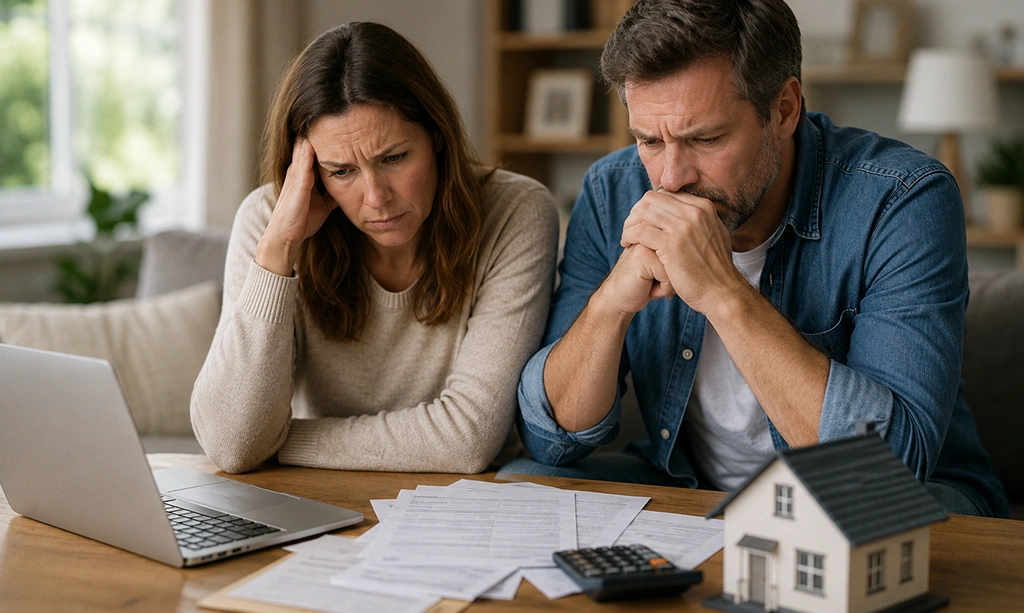
I shared a number on my page recently that I keep thinking about, because behind it are hundreds of families in our own backyard who are quietly scared right now. If you're one of them, I want you to hear this before anything else: a number on a chart is not your whole story. You are not a statistic, and you are not out of options. Let's look at what's really happening, and at everything you can still do.
Let that sink in for a minute. Three hundred and ten families in one county, in one month, getting the kind of letter that makes your stomach drop. And nearly half again as many as a year earlier. I'm Kady, and I posted that number not to scare anyone, but because so many people feel completely alone in this, like they're the only one falling behind. You are so far from alone. This is happening all over Florida, to good, hardworking people, for reasons that mostly aren't their fault.
Foreclosure filings in Duval County and across Florida have jumped, driven mostly by soaring insurance costs and the rising price of everything else, not by people being careless. But here's the hopeful truth: a foreclosure filing is not the same as losing your home. A filing is just one early stage, and many never reach an auction. Because Florida foreclosures go through the courts, you usually have months to act, and most homeowners today have real equity, which means you can often sell, pay off the bank, and walk away with money and your credit intact. If you've gotten a filing, or you're afraid one is coming, you have real options, and I'm glad to help you understand them, anywhere in Florida.
- You're not alone, and it's not your fault. Filings are up all over Florida, driven by insurance and cost of living.
- A filing is not losing your home. It's an early stage, and many cases never reach an auction.
- You have time. Florida foreclosures go through the courts, which usually takes months.
- Most homeowners have equity now. That often means you can sell, pay off the loan, and keep your credit.
- Acting early opens the most doors. One phone call, made soon, changes everything.
01Why the Number Jumped (It's Not What You Think)
When people see a stat like that, the first assumption is usually that a bunch of folks got careless with their money. That's just not what's happening. Duval County didn't suddenly forget how to budget. The cost of simply owning a home in Florida has climbed hard and fast, and it's squeezing responsible people who did everything right.
The single biggest culprit is insurance. Florida has some of the highest home insurance premiums in the country, and when your premium jumps, the escrow part of your mortgage payment jumps with it, even if your loan is a nice fixed rate. Add rising property taxes, higher costs for groceries and gas and everything else, and a lot of budgets that used to work simply stopped working. Foreclosure experts and national data point to the same thing: this rise is being driven largely by the soaring cost of living in places like Florida, not by reckless borrowing.
So if you're behind, or barely hanging on, please set down the shame. The ground shifted under you. That's not a character flaw. It's a math problem that a whole lot of your neighbors are quietly living through too.
And it helps to zoom out for a second. Florida now has one of the highest foreclosure rates of any state in the country, and Jacksonville keeps landing among the busiest metros for it. That's not a knock on our city or the people in it. It's the predictable result of an insurance and cost-of-living squeeze hitting a whole lot of households at once. Knowing it's a widespread, understandable trend, and not a personal failing, is the first step to facing it with a clear head.
02What a Foreclosure Filing Actually Means
Here's where a lot of the fear comes from: people hear "foreclosure filing" and picture themselves being put out on the curb next week. That is almost never how it works. A filing is the beginning of a legal process, not the end of your story. Let me clear up the biggest myths, because the truth is a lot gentler than the panic.
😰 The myth
A foreclosure filing means I've already lost my home and I'll be out on the street any day now.
💚 The truth
A filing is just an early legal stage. Many cases never reach an auction at all, because people work out a solution or sell first.
😰 The myth
There's nothing I can do now. It's out of my hands and up to the bank.
💚 The truth
You have real options and real rights, and your lender is required to review you for ways to keep your home before moving forward.
😰 The myth
If I lose the house, I lose everything I put into it.
💚 The truth
Most homeowners today have equity. Selling before an auction often lets you keep that money instead of losing it.
A foreclosure case moves in stages: a missed payment, then notices, then a filing in court, then (only much later, and only if nothing gets resolved) a judgment and an auction. There is real space between that first scary letter and anything final. That space is where your options live.
03How Much Time You Really Have
This is the part that lets people finally exhale. Florida is a judicial foreclosure state, which means your lender can't just take the house. They have to take you to court, and that takes time. A lot of it.
In fact, foreclosures in Florida commonly take many months, often stretching past a year from the first missed payment to an actual sale. Nationally, the average foreclosure has been taking well over a year and a half to work all the way through. When you get served with foreclosure papers here, you even have 20 days just to file your response with the court. The point isn't to wait around, it's that the clock is measured in months, not days.
Panic is what pushes people into bad decisions, like abandoning the home or ignoring the letters until it's too late. When you understand that you likely have months to work with, you can slow down, look at your options calmly, and choose the one that protects you most. Time is genuinely on your side here, but it's far easier to use it early than late. The doors that are wide open today start closing as an auction date gets closer.
Got a filing and don't know where to start? That's the most common call I get, and it's exactly what I'm here for. Tell me what's happening and I'll help you understand your options, free and with zero pressure. I'm Kady: call or text 904-400-2131, or email kady@helpinghandhomesfl.com.
04The Options You Still Have
Whether you want to keep your home or move on from it, there's a real path. Here's the honest menu:
- Catch up or reinstate. If your hardship was temporary, paying the past-due amount brings the loan current.
- A loan modification or forbearance. Your lender follows a required set of options designed to help you stay. I broke that whole process down in my guide to the loan modification waterfall lenders actually follow.
- A short sale or deed-in-lieu. If keeping the home isn't affordable, these help you exit without a completed foreclosure on your record.
- Sell before the auction. Often the cleanest path if you have equity. You pay off the loan, protect your credit, and walk away with money in your pocket instead of losing it.
- Free, expert help. A HUD-approved housing counselor can guide you at no cost, and here in Jacksonville there's even a local Foreclosure Intervention Program that may help eligible homeowners.
If you're torn between fighting to keep the home and letting it go, my honest guide on whether you can just walk away from your house in Florida walks through the trade-offs gently. There's no single right answer, only the one that's right for your life.
05The Hopeful Part: Most People Have Equity
I saved the most encouraging truth for here, because it changes everything about that scary 310 number. This is not 2008. Back then, millions of Florida homeowners owed more than their homes were worth, so foreclosure was often the only way out. Today is very different.
After the big run-up in home prices over the last several years, most Florida homeowners now have real equity in their homes. And that one fact flips the whole situation. It means that being in foreclosure very often does not have to end at an auction. If you have equity, you can usually:
- Sell the home (on the market or to a cash buyer),
- Pay off the bank in full,
- Keep whatever equity is left over as cash in your pocket,
- And protect your credit from the deep hit a completed foreclosure brings.
That's the possibility I see when someone calls me terrified about a filing. Not a dead end. A door. Sometimes a door that even comes with a check on the other side of it. The scary headline and your actual options are two very different things.
"I posted that 310 number because I couldn't stop thinking about the people behind it, all of them feeling alone and ashamed in the quiet of their own homes. If that's you, I want you to know there's no judgment here, only help. Falling behind doesn't make you a failure. It makes you human, in a hard season, in an expensive state. Reach out early, and let's find the door. There almost always is one."
If you're one of the 310, or afraid you'll be, let's talk
Tell me what's happening and I'll help you understand your options, point you to free help, and, if selling before the auction is your best move, get you a fair, no-obligation cash offer so you can move on with your equity intact.
Get My Cash Offer Just Talk to Kady06Questions People Ask Me
Does a foreclosure filing mean I've lost my house?
No. A filing is an early stage in a legal process, not the end of it. Many foreclosure cases never reach an auction, because homeowners work out a solution with the lender or sell the home first. There's real space between that first letter and anything final, and that space is where your options live.
How long does foreclosure take in Florida?
Usually many months, and often more than a year, because Florida requires the lender to go through the courts. When you're served with foreclosure papers, you have 20 days just to respond. That timeline gives you real room to work out an option, so long as you don't wait until an auction date is looming.
Why are so many people in Duval County getting foreclosure filings?
Mostly because the cost of owning a home in Florida has climbed sharply, especially insurance, along with taxes and the general cost of living. When those costs outrun people's income, financial stress builds. It's not about carelessness; it's a math problem that a lot of good families are facing right now.
Can I still sell my house if I've already gotten a filing?
In most cases, yes, right up until the auction. If you have equity, selling before the sale lets you pay off the bank, protect your credit far more than a foreclosure would, and keep any leftover equity as cash. The sooner you look at it, the more room you have to work with.
Where can I get free help?
A HUD-approved housing counselor can guide you at no cost, and they work for you, not the bank. Here in Jacksonville, the city also runs a Foreclosure Intervention Program that may help eligible homeowners. I'm always glad to point you to the right resource, even if it isn't me.
Do you only help in Duval County?
No. Jacksonville and Duval County are home base, but I'm happy to help and be a resource to homeowners anywhere in Florida. Wherever you are in the state, reach out, and if someone closer is a better fit, I'll gladly point you their way.
A gentle note: I'm a Florida home buyer, not an attorney, accountant, or housing counselor, and this article is general information, not legal or financial advice for your situation. Foreclosure timelines and options vary case by case, so please talk with a licensed Florida foreclosure-defense attorney, your loan servicer, or a free HUD-approved housing counselor about your specific circumstances. And if this is weighing on you, please reach out to someone. Making one call is the bravest and most helpful first step.
- ATTOM: U.S. Foreclosure Market Reports, 2026 (Florida among the highest foreclosure rates nationally)
- City of Jacksonville: Foreclosure Intervention Program
- Duval County Clerk of Courts: foreclosure process and case information
- U.S. Department of Housing and Urban Development (HUD): Find a free HUD-approved housing counselor
- Jacksonville Area Legal Aid: possible legal assistance for homeowners facing foreclosure