

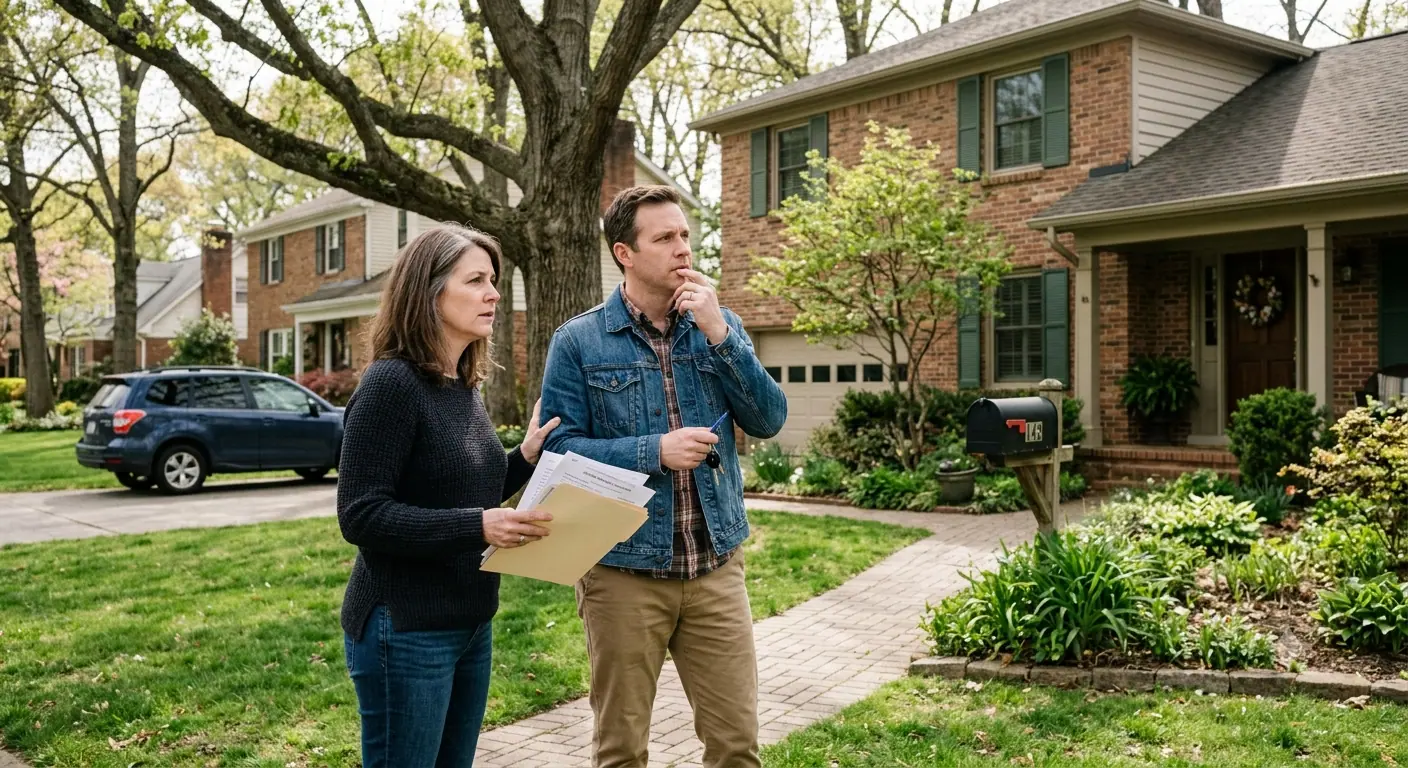
Her mother died in February. The servicer’s letter came in March and used the phrase “due and payable.”
The balance was two hundred and eighty one thousand dollars. A realtor had told her the house was worth about two hundred and forty.
So she assumed it was finished, stopped opening the mail, and nearly lost something she was entitled to.
I’m Kady. I help Florida homeowners through foreclosure, hardship, inherited property, illness, divorce, and the whole pile of things that arrive at once when somebody dies. I am a Realtor with Momentum Realty and I buy houses.
Florida has more reverse mortgage borrowers than almost anywhere in the country, which means Florida has more families getting this letter than almost anywhere in the country. And the information they get is terrible. Two things get repeated everywhere and both of them do real damage.
The first is that heirs have six months. Read HUD’s own guidance for heirs and that is not what it says.
The second is that if the loan is bigger than the house, the family gets nothing and should walk away. That is wrong often enough to matter enormously, because of the 95 percent rule.
So this is the page I wish that woman had found in March instead of September. What triggers the clock, what the real deadlines are, the four options heirs actually have, what protects a surviving spouse who was never on the loan, and what happens when the borrower is still alive but behind on taxes and insurance.
A HECM reverse mortgage becomes due and payable when the last surviving borrower dies, sells, or stops occupying the home as their principal residence, and also on a default such as unpaid property taxes, insurance, or failure to maintain the property. HUD’s guidance for heirs states the loan must be satisfied within 30 days of the borrower’s death, with the lender able to approve 90 day extensions where the estate documents active efforts to sell or repay. If the balance exceeds the home’s value, heirs may sell for at least 95 percent of current appraised value and the lender accepts the net proceeds as full satisfaction, and a post death transfer counts as a sale for that purpose. A HECM is non recourse, so no deficiency follows the family. A surviving non borrowing spouse may be able to stay for life, but must submit a Non Borrowing Spouse Certification to the lender within 30 days of the last borrower’s death. And while a borrower is alive, servicers may work with those less than $5,000 behind on property charges without calling the loan due, and an At Risk Extension can delay foreclosure for borrowers over 80 with a critical health circumstance.
- Call the servicer immediately and say you are the heir or personal representative. Silence is what costs families the house.
- It is not six months. It is 30 days with 90 day extensions you have to ask for and document.
- Ask about the 95 percent rule by name if the balance is higher than the value.
- Nobody owes the difference. A HECM is non recourse. The estate is not chasing your own money.
- A surviving spouse has a 30 day certification that protects a lifetime right. Miss it and it is gone.
- Keep the taxes and insurance paid until title transfers. The estate is responsible and a lapse makes everything worse.
01What Makes a Reverse Mortgage Come Due
A HECM, which stands for Home Equity Conversion Mortgage and is the FHA insured reverse mortgage nearly everyone has, is not a loan you repay monthly. There is no payment. The balance grows over time as interest and insurance premiums accrue, and it sits there until something triggers it.
There are two families of trigger and it matters enormously which one you are dealing with.
Maturity events. The last surviving borrower dies. The home is sold. The borrower stops occupying it as their principal residence, which includes a permanent move into a care facility. These are the ones people expect.
Defaults. Property taxes go unpaid. Homeowners insurance lapses. Required repairs or maintenance are not carried out. Condominium or homeowners association fees go unpaid in some circumstances. These catch families completely by surprise, because the borrower is alive and in the house and has never missed a payment, since there is no payment to miss.
That second category is why a great many Florida reverse mortgage foreclosures involve living borrowers. And it is why the insurance problem I have written about elsewhere is so dangerous for this group in particular. A non renewal that leads to a lapse is not just an expense on a HECM, it is a default. I have set out that whole chain in your insurance got cancelled and your mortgage payment jumped.
One more thing on the maturity side that trips families up. The loan comes due when the last surviving borrower dies. If both parents were borrowers and one is still living in the house, nothing has matured. If only one parent was a borrower and the other is a non borrowing spouse, that is a different and important situation covered further down this page.
02The Deadline Everyone Gets Wrong
Search this topic and you will be told, over and over, that heirs have six months. It is on law firm pages, estate blogs, probate services, everywhere.
HUD’s own guidance for heirs inheriting a home secured by an FHA insured HECM says something different. It says the loan must be satisfied within 30 days of the date of the borrower’s death. The lender may approve 90 day extensions where the estate or heirs document that they are actively trying to sell the property or repay the loan.
Why does this matter so much? Because the difference between those two beliefs is the difference between calling the servicer in week one and calling in month five.
A family that believes it has six months takes a few months to grieve, sorts the funeral, gets round to probate, and then rings the servicer thinking there is time left. A family that understands the real structure calls in the first fortnight, says plainly that they intend to sell or repay, and starts a documented extension process while they still have every option available.
The practical takeaway is not panic. It is paperwork. Extensions are available to people who ask and show their work. So:
Ring the servicer as soon as you can and tell them you are the heir or personal representative and that you intend to resolve the loan. Ask what documentation they need. Ask for the current payoff figure. Ask for a written statement of their timeline and what they will require for each extension. Then do something visible every month, whether that is listing the house, obtaining an appraisal, opening probate or getting a payoff quote, and send them evidence of it.
A servicer with a file showing a cooperative heir making documented progress behaves very differently from a servicer with a file showing five months of silence.
03The 95 Percent Rule
This is the one. If you take nothing else from this page, take this.
Reverse mortgage balances grow. Florida values have moved around. Which means it is entirely common for the balance to end up higher than the house is worth, and when the family hears that, they usually conclude the house is gone and there is nothing to be done.
Here is what HUD’s guidance actually provides. Where the loan balance exceeds the home’s value, the estate or heirs may sell the home for at least 95 percent of its current appraised value, and the lender accepts the net proceeds of that sale as full satisfaction of the loan. FHA insurance covers the shortfall. And a post death transfer counts as a sale for this purpose, which is how an heir who wants to keep the home can use it rather than only an heir who wants to sell.
Go back to the woman from the opening. Balance $281,000. Value about $240,000. She believed she had nothing. What she actually had was the ability to acquire her mother’s house for roughly 95 percent of a current appraised value, which on $240,000 is about $228,000, with the gap covered by insurance rather than by her.
Whether that was a good deal for her is a separate question that depends on the house, the market and her own finances. The point is that she had a choice and did not know it, and the reason she did not know it is that nobody told her and the internet told her the opposite.
Two practical notes.
The appraisal is the whole ballgame. The figure comes from a current appraisal, so understand how it was obtained and whether it reflects the property’s real condition. If you believe it is wrong, say so in writing with evidence, before anything is agreed.
Say the words. Ask the servicer directly: “If the balance exceeds the appraised value, will you accept 95 percent of the current appraised value as full satisfaction, and what is the process?” Ask in writing. A general question about options may not surface it. A specific question does.
04Non Recourse, and What It Means For You
The second great fear I hear is that the family will be chased for the difference. A son told me he was afraid of inheriting a hundred thousand dollar debt from his father.
He was not. A HECM is a non recourse loan. The collateral is the house. Neither the heirs nor the estate owes the lender money beyond the property itself, and the FHA insurance fund is what covers the lender’s shortfall. That is the bargain the borrower paid mortgage insurance premiums for across the whole life of the loan.
So the question “will this cost me money I do not have” has a clear answer, and the answer is no, not in the sense people fear.
There are two real responsibilities though, and they are not the same as a debt.
The estate remains responsible for property taxes and insurance until title transfers. If those lapse while everybody is waiting for probate, you have created a new problem on top of the one you are solving, and in Florida an uninsured house is a serious exposure in its own right.
And if the house is going to sit empty for months, somebody needs to be looking after it. Vacant property deteriorates, insurers treat vacancy differently, and a property that was worth $240,000 in March can appraise lower in September. On an underwater loan where the 95 percent rule is in play, the appraised value is the number that decides your options, so letting the house decline is letting your own options decline with it.
05The Four Options Heirs Have
Strongest effect
It widens your buyer pool
This is the real value and it is larger than most people think. Florida has an enormous population of buyers looking after ageing parents, adult children who moved home, or both at once. A suite moves your house from “another three bedroom” to the only house on their list. Competition is what moves price.
works whether permitted or not, but see below
Depends entirely on paperwork
Appraised value
An appraiser gives weight to what is legal and permitted. A permitted ADU with a certificate of occupancy can be valued as a genuine second unit. An unpermitted conversion is often treated as unfinished space, excluded from the gross living area, or flagged as a non conforming use that affects the whole report.
permits are the difference
Only if legal
Rental income in financing
Some conventional guidelines now allow a portion of documented rental income from an accessory unit on a primary residence to be considered in qualifying. The condition is always that the unit is legal and permitted and allowed by zoning. An unpermitted suite produces income no underwriter will count.
ask your lender for their specific rule
The honest caveat
You rarely recover the full build cost
A detached ADU in Florida is real construction with a foundation, utilities, impact fees and a Florida windstorm rated roof. The cost frequently exceeds the measurable appraised lift. Build it because you need it and the family arrangement is worth it, and treat the resale appeal as a bonus rather than the business case.
build for use, not for flip
And then there is the fifth thing, which is not an option so much as what happens when nobody chooses. The servicer forecloses. In Florida that means a lawsuit, a judgment and a sale, and it is the worst of the five because it takes the timing out of the family’s hands, adds costs, and forecloses the chance to use any of the other four.
Which option is right depends on three numbers: the current payoff balance, a realistic current value, and what the house actually needs in repairs. Get all three before you decide anything. I will help you work them out for free if you want a second opinion, and if the answer is list it with a traditional agent I will tell you that.
06If There Is a Surviving Spouse
This section exists because the consequence of getting it wrong is somebody losing a home they could have kept for life, and the window is thirty days.
Sometimes only one spouse was a borrower on the HECM. Often because the other was too young to qualify at the time, which is a common and perfectly ordinary thing to have done. That person is a non borrowing spouse, and when the borrowing spouse dies, the loan technically becomes due and payable.
But a qualifying non borrowing spouse is excluded from the obligation to satisfy or transfer that falls on heirs, and repayment may be deferred so that they can remain in the home for the rest of their life.
The protection is not automatic. Among the requirements, the non borrowing spouse must submit a Non Borrowing Spouse Certification to the lender within 30 days of the last surviving borrower’s death, along with other conditions including continuing to occupy the home as their principal residence and keeping the property charges paid.
This is the most time critical thing on this page. If the surviving spouse was not a borrower on the loan, ring the servicer now, say the words “non borrowing spouse,” and ask what certification they require and by when. Thirty days from a death is a terrible window to have to meet, which is exactly why families miss it while they are arranging a funeral. If you are the adult child helping, this is the one job to do before anything else. A HUD approved housing counselor can help and the service is free, on 800-569-4287.
A closing word on this, said gently. Not every non borrowing spouse qualifies, because the rules differ depending on when the loan was originated and how the paperwork was done. If the certification deadline has already passed, or if the lender says the spouse does not qualify, that is a moment for a Florida attorney or a HUD counselor rather than for giving up. People have been wrongly told they do not qualify. It is worth one proper check.
07When The Borrower Is Still Alive
Half the people reading this are not heirs. They are a borrower who has fallen behind on property taxes or insurance, or an adult child who just found out their parent has, and they think a foreclosure is inevitable. It often is not, and the protections here have improved.
Small arrears. Servicers may work with borrowers who are less than $5,000 behind on property charges without calling the loan due, helping set up a plan to catch up. If your parent is two thousand dollars behind on taxes, that is a solvable problem and not a foreclosure.
Repayment plans. HUD removed the prohibition on successive repayment plans for larger arrears, which means a borrower who has already had one plan is no longer automatically out of options. Homeowners association and condominium fees may be included in a plan at the servicer’s discretion.
The At Risk Extension. This one is worth knowing by name. A servicer may delay foreclosure where a borrower over the age of 80 is in default on property charges and either the borrower or another household member has a critical health circumstance. Under the FHA Servicing Guide version effective 29 April 2024, that extension lasts as long as the borrower lives in the home, with no annual renewal requirement.
Occupancy certification. Borrowers must complete an annual occupancy certification, and a surprising number of defaults are not financial at all. They are a form that was never returned, often because the borrower was in hospital or the mail went to an old address. Servicers may now verify occupancy by phone with the borrower and an eligible non borrowing spouse. If your parent has a HECM, make sure the servicer has a current phone number and a reliable mailing address, and watch for that certification every year.
Relocation assistance. Where the outcome genuinely is a deed in lieu or a short sale, servicers may offer meaningful sums toward relocation, and up to a further amount toward probate costs, with documentation required above a threshold. Nobody volunteers this. Ask.
If you are helping an older parent through this, it is worth also reading what I have written on options and protections for senior homeowners and, for the tax side specifically, on what happens when you cannot pay Florida property taxes, because unpaid taxes are both a HECM default and a separate route to losing the house.
08Probate, Florida Foreclosure, and The Clock
Two timing problems collide here and families get crushed between them.
The first is that the servicer’s clock does not wait for probate. Thirty days from death, with documented extensions, is the structure, and a Florida probate can run far longer than that. Nobody at the servicer is going to pause the file because the estate is not yet open.
What to do about it: you do not have to wait for letters of administration to start talking. Ring the servicer, identify yourself, explain where probate stands, and ask what they will accept in the interim. Most will communicate with a person who is clearly the intended heir and clearly cooperating, and getting the file marked as an active resolution rather than a silent default is worth a great deal.
The second is that if a foreclosure is filed, Florida’s rules take over. Florida is a judicial foreclosure state, so the servicer has to sue. Once served with a summons and complaint, the response deadline is generally 20 days. That applies to an estate and a personal representative the same as to anyone else, and a default judgment is a very bad place to begin negotiating from. I have written about that deadline specifically in you have 20 days, here is what to file.
And one honest observation from doing this a while. The single biggest predictor of how these end is not the balance, the value, or the condition of the house. It is whether somebody in the family picked up the phone in the first month. The families who call early almost always land somewhere acceptable. The families who open the mail in month six are choosing between the two worst options on the list.
What people believe
Heirs get six months to deal with a reverse mortgage.
What is true
HUD’s heir guidance says 30 days, with 90 day extensions available where you document active efforts to sell or repay.
What people believe
The loan is bigger than the house, so we get nothing and may owe the difference.
What is true
It is non recourse, so nobody owes a deficiency, and the 95 percent rule may let you buy or sell it anyway.
What people believe
Dad was the only borrower, so Mom has to leave now that he has died.
What is true
A qualifying non borrowing spouse may stay for life, but there is a certification due to the lender within 30 days of the death.
She called me in September, seven months after her mother died, convinced it was over and she was only ringing to find out how badly.
We got the payoff, got a current value, and I told her about the 95 percent rule. She had never heard of it. Neither had the two people she had already asked.
She did not keep the house in the end. The numbers and her own circumstances did not support it, and she was at peace with that.
But she made that decision herself, with the real figures in front of her, instead of having it made for her by a foreclosure. That is the whole difference, and it is why I write these.
Reverse mortgages are one area where HUD approved housing counseling is excellent, specialised, and completely free. Counselors deal with HECM servicers constantly, know the certifications and extensions by name, and have no financial interest in what you decide. The HUD counseling line is 800-569-4287. If you are an adult child helping a parent, or an heir who has just received a due and payable letter, that call should come before any call to a company that wants to buy the house, including mine.
Send me the balance, the county and roughly what the house is worth, and I will tell you which of the four options actually fit, even when the answer is a HUD counselor and a traditional agent.
Questions People Ask Me
What happens to a reverse mortgage when the borrower dies?
It becomes due and payable. The estate or heirs then choose among four routes: sell and keep any equity above the balance, pay the loan off and keep the home, sell for at least 95 percent of current appraised value where the balance exceeds the value, or transfer title to the lender through a deed in lieu of foreclosure. If nobody acts, the servicer forecloses, which is the worst outcome because it removes the family’s control over price and timing. The loan comes due when the last surviving borrower dies, so if a co borrower is still living there, nothing has matured.
How long do heirs have to pay off a reverse mortgage?
Less time than you have probably been told. HUD’s guidance for heirs states the loan must be satisfied within 30 days of the date of the borrower’s death, and that the lender may approve 90 day extensions where the estate or heirs document that they are actively trying to sell the property or repay the loan. The widely repeated flat six months is not what the guidance says. Extensions are real and obtainable, but they are requested and documented rather than automatic, which is why calling the servicer in the first fortnight matters so much.
What is the 95 percent rule on a reverse mortgage?
Where the loan balance exceeds the home’s value, HUD’s guidance allows the estate or heirs to sell the home for at least 95 percent of its current appraised value, with the lender accepting the net proceeds of that sale as full satisfaction of the loan. FHA insurance covers the shortfall. A post death transfer counts as a sale for this purpose, which means an heir who wants to keep the home can use it, not only an heir who wants to sell. Ask the servicer about it specifically, because a general question about options may not surface it.
Can I keep my parent’s house if it has a reverse mortgage on it?
Yes, if you can satisfy the loan. Usually that means refinancing into a conventional mortgage in your own name or paying cash. Where the balance is higher than the value, the 95 percent rule can make this dramatically more achievable than it first appears, because a post death transfer counts as a sale and you may be able to acquire the property at 95 percent of current appraised value rather than at the full balance. Get the payoff figure, a realistic current value and a repair estimate before you decide.
Do heirs have to pay the difference if the loan is more than the house is worth?
No. A HECM is a non recourse loan, meaning the house is the collateral and neither the heirs nor the estate owes the lender beyond the property itself. The FHA insurance fund covers the lender’s shortfall, which is precisely what the borrower’s mortgage insurance premiums paid for over the life of the loan. The estate does remain responsible for property taxes and insurance until title transfers, but that is an ongoing cost of holding the property, not an inherited debt.
My father was the only borrower. Can my mother stay in the house?
Possibly for the rest of her life, and this is time critical. A qualifying non borrowing spouse is excluded from the obligation to satisfy or transfer that falls on heirs, and repayment may be deferred so they can remain in the home. But the non borrowing spouse must submit a Non Borrowing Spouse Certification to the lender within 30 days of the last surviving borrower’s death, along with other requirements including continuing to occupy the home as their principal residence and keeping property charges current. Ring the servicer now and use the phrase “non borrowing spouse.”
What is a Non Borrowing Spouse Certification?
It is the document a surviving spouse who was not a borrower on the HECM submits to the lender to establish eligibility for deferral of repayment, and it is due within 30 days of the last surviving borrower’s death. Eligibility also depends on other conditions and on how and when the loan was originated, so not every non borrowing spouse qualifies. If the deadline has passed or the lender says the spouse does not qualify, speak to a HUD approved housing counselor or a Florida attorney before accepting that, because people have been told wrongly.
Can a reverse mortgage be foreclosed while the borrower is still alive?
Yes, and this accounts for a large share of reverse mortgage foreclosures. There is no monthly payment to miss, but the borrower must keep property taxes paid, keep homeowners insurance in force, maintain the property, and continue occupying it as their principal residence, as well as complete an annual occupancy certification. A failure on any of those can put the loan into default and make it due and payable. In Florida, unpaid property taxes are especially dangerous because they are both a HECM default and a separate route to losing the house entirely.
My parent is behind on taxes and insurance. Is foreclosure inevitable?
Often not. Servicers may work with borrowers who are less than $5,000 behind on property charges without calling the loan due, and will help set up a plan to catch up. HUD also removed the prohibition on successive repayment plans for larger arrears, so a borrower who has already had one plan is not automatically out of options, and association fees may be included in a plan at the servicer’s discretion. Call the servicer and ask for loss mitigation, and call a HUD approved housing counselor on 800-569-4287, which is free.
What is the At Risk Extension?
It is a provision allowing a servicer to delay foreclosure where a borrower over the age of 80 is in default on property charges and either the borrower or another household member has a critical health circumstance. Under the FHA Servicing Guide version effective 29 April 2024 the extension lasts as long as the borrower lives in the home, with no annual renewal requirement. It is not widely known and it is worth raising by name if it might apply to your situation.
Why would a reverse mortgage default over paperwork?
Because of the annual occupancy certification. Borrowers must complete it, and a meaningful number of defaults are not financial at all: the form never came back, often because the borrower was in hospital, had moved temporarily, or the mail went to an old address. Servicers may now verify occupancy by telephone with the borrower and an eligible non borrowing spouse. If you are helping a parent with a HECM, make sure the servicer holds a current phone number and a reliable mailing address, and watch for that certification each year.
Does a reverse mortgage have to go through probate in Florida?
The loan and the probate are separate processes on separate clocks, and the servicer’s clock does not pause for the estate. You do not have to wait for letters of administration to start talking to the servicer. Identify yourself, explain where probate stands, and ask what they will accept in the interim. Getting the file recorded as an active resolution rather than a silent default is worth a great deal. Whether probate is required for the property itself is a question for a Florida probate attorney.
Is a deed in lieu better than letting it foreclose?
Generally yes. A deed in lieu transfers title to the lender without a foreclosure action, which is cleaner, faster and avoids the costs and the public judgment. Servicers may also offer relocation assistance and a contribution toward probate costs in connection with a deed in lieu or a short sale, with documentation required above a threshold. Nobody tends to volunteer those amounts, so ask what is available rather than assuming there is nothing.
The house needs a lot of work. Does that change things?
It changes the arithmetic rather than the options. Condition feeds into the appraised value, and on an underwater loan the appraised value is the number that decides whether the 95 percent route helps you. It also matters practically: a vacant Florida house deteriorates, insurers treat vacancy differently, and a property that appraised at one figure in spring can appraise lower by autumn. If the house is sitting empty while probate grinds on, somebody needs to be looking after it, because letting the house decline means letting your own options decline with it.
What is the first thing I should do?
Pick up the phone, in this order. Ring the servicer, say you are the heir or personal representative, and ask for the payoff balance, their timeline and what documentation they need. If there is a surviving spouse who was not a borrower, say “non borrowing spouse” in that same call. Then ring a HUD approved housing counselor on 800-569-4287, which is free and genuinely expert on this. Then get a realistic value on the house. Those three calls, in the first fortnight, are what separate the families who land somewhere acceptable from the ones who do not.
Keep reading
A gentle note: I am a Florida Realtor with Momentum Realty and a home buyer, not an attorney, an accountant, a housing counselor, or a mortgage lender, and this is general information rather than advice about your loan or your estate. HECM rules are federal and change, they differ depending on when a loan was originated, and servicers apply them with some variation. Programme details described here reflect publicly available HUD and FHA guidance as of October 2026, including HUD’s guidance for heirs inheriting a home secured by an FHA insured HECM and the FHA Servicing Guide version effective 29 April 2024. Please confirm everything with the loan servicer and a HUD approved housing counselor on 800-569-4287, and speak with a licensed Florida attorney about probate or if a foreclosure action has been filed.
Written by Kady Andreoli, founder of Helping Hand Home Solutions FL and a Realtor with Momentum Realty. Helping Florida homeowners explore every available option, from stopping foreclosure to selling on their own terms. Guidance without judgment, and people before profit. 904-400-2131 · kady@helpinghandhomesfl.com